

How San Jose Businesses Can Choose the Right carpet cleaning san jose service depends on more than price. Facility managers and business owners must weigh carpet condition, cleaning methods, drying needs, operating schedules, and the provider’s stated limits. This guide explains how to compare proposals and choose a practical service scope.
What Does Your Business Carpet Need?
Before requesting quotes, identify the carpet’s condition, construction, and maintenance demands. A useful service plan depends on more than square footage because an office entryway faces different problems from a lightly used conference room.
Record the carpet’s fiber type, age, construction, traffic level, and areas showing wear. Note tracked-in soil, visible stains, persistent odors, pet or food incidents, previous cleaning attempts, and any water exposure. Photos and a simple floor plan can help providers understand where problems occur and whether the entire building needs service.
Separate routine soil removal from conditions requiring specialized evaluation. Persistent dampness, suspected mold, water damage, damaged carpet, or recurring odors may not be resolved by standard cleaning alone. Ask what assessment or remediation steps are appropriate before approving routine work.
Different areas may also need different schedules or methods. Entryways and high-traffic corridors often collect more soil, while kitchens may develop food and grease-related stains. Waiting rooms may need frequent attention because appearance and odor affect visitors’ impressions. A provider should be able to discuss these areas separately rather than recommend one blanket plan.
Regular vacuuming remains essential between professional appointments. Staff should also blot spills promptly, document incidents, and avoid unapproved chemicals that could set stains or affect the carpet.
How Often Should San Jose Businesses Clean Carpet?
There is no universal schedule for professional carpet cleaning. San Jose businesses should set frequency by traffic, soil conditions, carpet manufacturer guidance, and applicable industry recommendations, then adjust the plan when conditions change.
High-traffic entrances, corridors, reception areas, and waiting rooms may need professional service more often than lightly used offices. Increase attention when employees or visitors track in soil, pollen, or moisture; when occupancy is high; or when outdoor conditions bring more dust and debris inside. Food service areas, pet-friendly workplaces, seasonal events, spills, visible soil, and recurring odors can also shorten the interval between cleanings.
According to the U.S. Environmental Protection Agency’s indoor air guidance, regular vacuuming of carpets and rugs helps remove dust and other particles that accumulate indoors. That recommendation supports consistent vacuuming between professional appointments, but it does not establish one fixed schedule for every commercial property.
Use a written schedule for routine service, but review it after documenting soil levels, stains, occupancy, and seasonal patterns. Follow the carpet manufacturer’s care instructions before selecting a method or setting a frequency. Professional cleaning supports ordinary maintenance and particle control, but it should not be presented as a cure for allergies, asthma, or other medical conditions.
How San Jose Businesses Can Choose the Right Provider
Compare providers by matching their proposed method, written scope, technician process, and pricing assumptions to your facility’s carpet and operating needs. The lowest quote is not necessarily the most useful if it excludes stain treatment, furniture movement, or the time required for adequate drying.
Ask each company to inspect the carpet and explain whether hot-water extraction or a lower-moisture alternative is more suitable. The recommendation should account for fiber type, carpet construction, soil levels, ventilation, and how quickly the space must reopen. A provider should also explain expected drying conditions without promising one fixed timeframe.
For another point of comparison, review the carpet cleaning san jose service information alongside other local options before requesting estimates.
Request a written scope that identifies every room or area included, expected stain and spot treatment, deodorizing, protection products, furniture movement, access requirements, and any price assumptions. Ask whether technicians inspect fibers and test products before applying them broadly. Confirm how they handle delicate materials, loose seams, discoloration, water exposure, or damage from previous cleaning attempts. Keep records of recurring stains and problem areas so each provider answers the same questions and your team can compare proposals on service quality, risk, and total cost.
What Happens During Commercial Carpet Cleaning?
Commercial carpet cleaning typically begins with an inspection, followed by preparation, spot treatment, cleaning, moisture recovery, and a final review. The provider should also explain when employees can walk on the carpet, replace furniture, and resume normal operations.
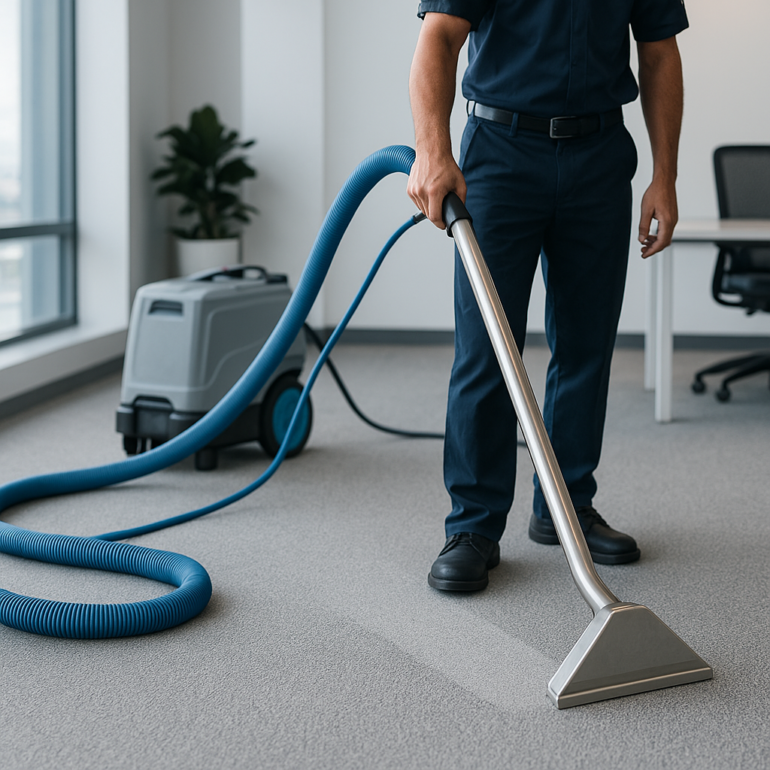
Technicians usually assess fiber type, carpet backing, seams, visible damage, soil levels, and previous cleaning or water exposure. They may pre-vacuum, move or protect approved furnishings, and apply targeted treatments to spots or heavily soiled areas. The main cleaning step may use hot-water extraction or a lower-moisture method. The suitable approach depends on the carpet’s construction, fiber, backing, soil type, condition, and moisture limits.
After cleaning, extraction or recovery equipment removes loosened soil and moisture. Technicians may groom the carpet when appropriate to reset its appearance and then conduct a final inspection with the customer or site contact.
Drying time is a provider-specific estimate, not a fixed promise. Ventilation, temperature, humidity, carpet construction, soil load, and the amount of moisture used can all affect reopening. Ask for separate guidance on foot traffic, furniture placement, and normal occupancy before scheduling work.
When Is Routine Cleaning the Wrong Service?
Routine cleaning is not the right first step when carpet is water-damaged, persistently damp, visibly deteriorating, or repeatedly producing an odor. Those conditions may point to a leak, saturated padding, trapped moisture, or another problem that cleaning alone cannot resolve.
Cleaning can improve appearance and remove ordinary tracked-in soil. It cannot repair a plumbing failure, dry a wet subfloor, replace damaged padding, or correct a structural moisture source. Repeatedly treating the surface without identifying the cause may leave the problem unresolved and complicate later assessment.
Document the affected rooms, dates, odors, visible staining, water exposure, and any changes in the carpet or flooring. Before work begins, ask each provider to state what the proposed service can address and what requires a separate moisture, damage, or mold assessment. Request that those limits appear in the written scope.
Use a simple decision check: match the method to the carpet and its condition, require a clear scope, plan for adequate drying, and compare inspection findings, process details, and limitations rather than choosing the lowest quote.
Key Takeaways
- Start with the carpet’s fiber, construction, traffic, stains, odors, and history of water exposure.
- Set service frequency according to use and soil conditions, not a universal calendar.
- Compare written scopes, cleaning methods, drying plans, exclusions, and pricing assumptions.
- Treat persistent dampness, damage, or recurring odors as reasons for further evaluation.
- Keep routine vacuuming and prompt spill response in place between professional appointments.
For more coverage on this topic, see related articles on our publishing site.