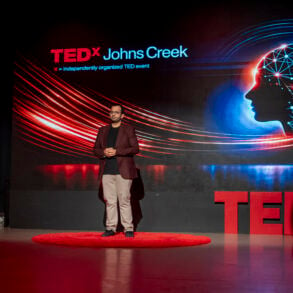


Corporate America excels at many things but handling employee grief isn’t one of them. When someone dies, whether a colleague or a team member’s family, most organizations default to a familiar script: send flowers, offer bereavement leave, tell people the employee assistance program is available. Then everyone returns to business as usual, pretending normalcy while unspoken grief festers beneath the surface. Emilio Parga has built his career showing organizations there’s a better way.
As founder and CEO of The Solace Tree, Parga specializes in guiding companies and athletic teams through the aftermath of loss. His insight is that organizations are communities, and communities require collective processing of collective grief. Treating death as an individual employee’s private matter ignores the reality that teams grieve together, whether or not anyone acknowledges it.
The cost of getting this wrong shows up in retention, productivity, and culture. Employees whose grief goes unaddressed often disengage or leave entirely. Teams that lose a member without processing that loss struggle with cohesion and trust. Organizations that handle death poorly signal they value productivity over humanity, a message that reverberates far beyond the immediate situation.
Consider what typically happens after a workplace death. Human resources sends an announcement. Managers are told counseling is available. Work continues with perhaps a brief memorial or moment of silence. The deceased person’s desk is cleared, their responsibilities reassigned, and within weeks it’s as if they were never there. Meanwhile, colleagues are left wondering whether anyone else is struggling as much as they are, whether it’s appropriate to talk about the person who died, whether admitting ongoing sadness means they’re not coping well.
Parga’s approach creates space for the conversation that’s happening anyway, just unproductively. Through facilitated dialogue, The Solace Tree helps teams acknowledge loss collectively. Employees learn they’re not alone in their grief. They gain language for expressing complicated feelings about death, loss, and how to honor a colleague while moving forward. They rebuild the trust and connection that sudden loss disrupts.
The work extends beyond companies to athletic teams, where the stakes can feel even higher. A team is an intimate ecosystem. Members spend hours together, push through physical and mental limits alongside each other, build bonds that often last lifetimes. When a coach dies or a teammate is killed, that ecosystem shatters. Without support, teams often fall apart, not because the individual members lack dedication but because the collective grief becomes unbearable.
Parga has guided teams through exactly these scenarios. A high school football team loses their beloved coach to a heart attack mid-season. A college soccer team learns their captain died by suicide. A professional organization experiences a workplace tragedy. In each case, the instinct is often to power through, to honor the deceased by winning or succeeding or not falling apart. But that approach usually backfires because it requires suppressing grief rather than processing it.
What works instead is creating structured time to grieve together. This doesn’t mean endless processing or letting performance slide. It means acknowledging the loss, giving people permission to be authentic about their pain, teaching them to support each other, and then helping them redirect energy toward shared goals that honor rather than ignore what happened. Teams that do this often grow closer rather than fragmenting, discovering resilience they didn’t know they possessed.
His professional background reflects both the breadth and depth of this work. A PBS Emmy Award winner, recipient of multiple Communicator Awards, named Citizen of the Year, and scholarship recipient for national pediatric palliative care conferences, Parga has built expertise that organizations increasingly recognize they need. The corporate world is slowly understanding that emotional intelligence isn’t soft skills but essential leadership capacity, particularly when navigating crisis.
The cultural resistance remains significant. Many workplaces still operate under the assumption that personal lives and professional responsibilities should remain separate. Grief is personal, therefore not something to address at work. But this philosophy ignores reality. People don’t compartmentalize effectively. An employee whose parent just died brings that grief to every meeting, every decision, every interaction. Pretending otherwise doesn’t make the grief disappear; it just makes the employee feel isolated and unsupported.
What Parga teaches organizations is that addressing grief directly actually improves outcomes. When employees feel seen and supported, they’re more likely to stay engaged. When teams process loss together, they build trust that carries through non-crisis times. When leadership demonstrates humanity in handling death, employees develop loyalty that survives normal workplace frustrations. The investment in grief support pays dividends far beyond the immediate situation.
The methodology adapts to organizational context. A startup with thirty employees needs different facilitation than a corporate division with three hundred. A manufacturing team that’s worked together for decades differs from a remote technology team that rarely meets in person. Parga has learned to read environments quickly, understand what people need, and deliver support that fits the culture while still challenging norms that don’t serve grief well.
Looking forward, he envisions expanding corporate and team grief support nationwide. Too many organizations still lack access to facilitators who understand both organizational dynamics and grief psychology. He’s training more people to do this work, developing resources that make intentional dialogue scalable, and building partnerships that embed grief literacy into organizational culture rather than treating it as crisis response.
The vision includes shifting how leadership thinks about responsibility. Currently, many executives view employee wellbeing as HR’s domain or something counseling services should handle. But the most effective grief support requires leadership engagement. When executives acknowledge loss, share appropriate vulnerability, and model that grief is acceptable, it changes organizational permission structures. Employees follow leadership cues about what’s safe to express.
The challenges extend beyond individual organizations to industry norms. Athletic conferences, professional associations, and corporate networks all influence how member organizations handle grief. Shifting these broader norms requires demonstrating that intentional grief support produces better outcomes than avoidance. It means showing competitive advantages to emotional intelligence, trust-building through authenticity, and long-term retention through short-term investment in support.
What Parga has learned over years facilitating these conversations applies broadly to organizational culture. Presence matters more than having all the answers. Authenticity builds trust faster than polish. Communities that talk about hard things together develop resilience for all challenges. Leaders who demonstrate humanity inspire loyalty that performance pressure alone never achieves. These lessons reshape how forward-thinking organizations operate across all functions, not just crisis response.
The work matters because death is statistically inevitable for any organization of size. Companies will lose employees. Teams will lose members. The question isn’t whether loss will occur but whether organizations will have frameworks to navigate it constructively. Currently, most don’t. They muddle through with good intentions but little guidance, often making things worse through avoidance or superficial gestures.
What The Solace Tree offers is an alternative: intentional dialogue that helps organizations grieve collectively while maintaining function. It’s not about choosing between productivity and humanity but recognizing they’re interconnected. Teams that process grief effectively often emerge stronger. Organizations that support employees through loss build cultures people actually want to join and stay in. The return on investment isn’t just moral but practical.
For organizational leaders reading this, the invitation is clear. Stop treating grief as individual employees’ private business. Stop defaulting to generic bereavement policies and hoping people figure it out. Stop signaling that productivity matters more than humanity. Instead, build capacity for collective grief support before crisis strikes. Learn facilitation basics or partner with experts like Parga. Create cultural permission for authentic emotion. Demonstrate through action that your people matter, not just as workers but as humans facing one of life’s hardest experiences.
The transformation isn’t instantaneous but it’s achievable. Organizations that commit to this work report measurable improvements in retention, engagement, and culture. More importantly, they become places where people feel genuinely supported through all of life’s stages, not just the convenient ones. That’s the difference between workplaces people tolerate and communities people belong to, and in an era of unprecedented employee mobility, that difference matters more than ever.