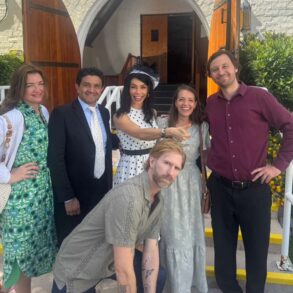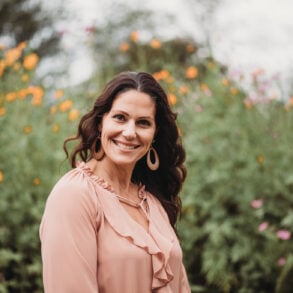

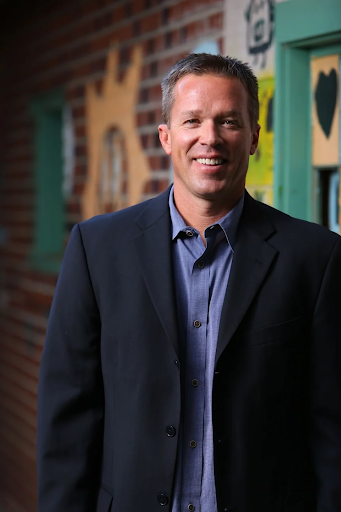
The Solace Tree has served grieving families for more than two decades. Courtesy of The Solace Tree.
Every founder says they found a gap in the market. Emilio Parga found one nobody wanted to look at.
Children grieve. Roughly one in eleven American children will experience the death of a parent or sibling before they turn 18, more than 6.6 million kids. Yet when Parga was working with students in Northern Nevada in the early 2000s, there was no grief support program for young people anywhere in the region. Families were left to improvise through the worst thing that had ever happened to them.
Parga built The Solace Tree to fill that gap, and he has spent more than two decades proving the model works. The Reno nonprofit gives children, teens and families a safe space to grieve, connect and heal, and it recently marked more than two decades of service to its community.
What makes the story useful to anyone building anything is how the organization grew. Parga did not scale by chasing size. He scaled by following the problem.
The problem turned out to be everywhere. Schools had grieving students and teachers with no training. Businesses had grieving employees and managers who avoided the subject. Healthcare organizations dealt with death daily and still struggled to talk about it. Athletic teams had grieving players surrounded by a culture that rewards emotional control. The Solace Tree now serves all of them, from K-12 schools and universities to companies and collegiate and professional sports programs.
“Grief rarely looks the same from person to person,” Parga says.
That insight is the product. Most institutions respond to loss with a single script, a card, a week of leave, a moment of silence. Parga trains them to recognize the dozens of forms grief actually takes, the fatigue, the slipping focus, the irritability, the silence, and to respond to the person in front of them rather than the script.
He calls the skill grief literacy, and teaching it has become the growth engine of the organization. The term does for loss what financial literacy did for money. It takes a subject people were never taught to handle and turns it into something they can practice. A school that brings in The Solace Tree for one crisis becomes a district that trains its staff. A team that calls about one player becomes a program that builds support into its culture.
Parga’s own credentials anchor the expansion. He holds a master’s degree in education and practices as a sports and performance thanatologist. He created the Death, Trauma, and Informed Grief Special Interest Group within the Association for Applied Sport Psychology, effectively opening a new professional lane inside sports psychology.
The next products are already in development. A youth sports camp built around mental health. A training curriculum for coaches. A parent education program in grief literacy. Each one pushes the work earlier, reaching the adults around young people before a loss instead of after one.
The nonprofit sector rarely gets covered like the startup world, but the parallels hold. Parga identified an unserved market, built a differentiated service, survived more than two decades of funding cycles and kept expanding into adjacent segments. The difference is the return. His compounds in families that stayed standing.
Ask him what the organization sells, and the answer is the thing no competitor has figured out how to fake. A room where a grieving eight-year-old, or a grieving executive, or a grieving linebacker, hears the only message that matters. You are not alone in this.
Two decades in, demand has never been the problem. It never will be. Loss is the one market that reaches everyone eventually. Parga just refused to keep pretending otherwise.