

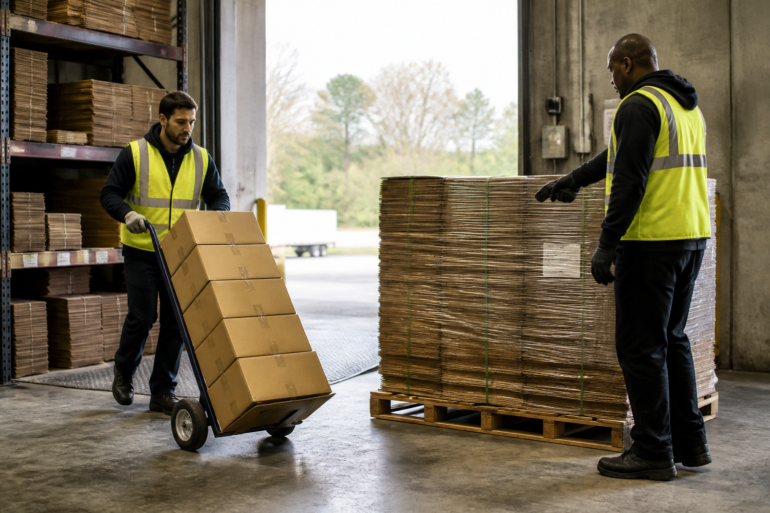
Key Takeaways
- Compare pallet pricing, not shelf pricing — a bulk cardboard box seller can drop your per-unit cost 60% to 80% below what you’d pay grabbing bundles off a retail rack.
- Match flute strength to your product before you order 500 units — B-flute handles most ecommerce loads, but heavier freight needs C-flute or double-wall stock.
- Set a reorder trigger at 30% remaining inventory, not zero — a bulk cardboard box seller with a 3-day ship window still needs buffer room for demand spikes.
- Request free samples before committing to a bulk run — guessing on box dimensions is the fastest way to end up with a warehouse full of the wrong size.
- Check minimums closely — some sellers now offer custom printed boxes at 100 to 250 units, which is a lot more workable for a small operation than the old 5,000-unit floor.
- Stock flat-shipped bundles instead of pre-assembled boxes whenever pallet space is tight — flat storage can cut your footprint by half compared to standing inventory.
Ten boxes off a rack cost more per unit than 500 pulled straight off a pallet. Every warehouse manager learns that lesson the hard way, usually after burning a Saturday driving between three different stores just to cover a rush order. Retail packs are built for convenience, not economics — and convenience always has a markup attached to it.
A real bulk cardboard box seller runs on a different model entirely. Pallet pricing, flute specs, reorder scheduling, storage footprint — these are the things that actually move your per-unit cost down, not a coupon code on a ten-pack. Once your shipping volume passes even 50 or 100 orders a month, the math stops favoring the retail run completely.
So what changes when you buy from a supplier built for volume instead of foot traffic? Quite a bit, — most of it shows up on your P&L before it shows up in your warehouse.
The Real Difference Between a Bulk Cardboard Box Seller and a Retail Rack
Picture a warehouse manager grabbing ten boxes off a shelf at a big-box store on a Tuesday because the reorder got pushed to the back burner. That box costs three to four times more per unit than the same size bought by the pallet — and it happens every single week until someone finally fixes the buying pattern. A bulk cardboard box seller flips that math by shipping direct from manufacturing, not from a retail shelf marked up twice before it reaches you.
Why Per-Unit Cost Drops When You Buy by the Pallet, Not the Bundle
Pallet buying spreads freight and handling costs across hundreds of units instead of ten. A 12x9x6 mailer that runs near a dollar off a rack can drop to a fraction of that in a 500-unit order. That gap is pure margin sitting on your invoice.
The Hidden Reorder Cycle Problem Retail Boxes Create
Ten-box runs force weekly trips, weekly price checks, weekly stockouts. Bulk orders reset that clock to once a quarter — freeing warehouse labor for actual fulfillment instead of box-hunting errands.
How a Bulk Cardboard Box Seller Builds for Pallet Space, Not Shelf Space
Retail box racks are built to move ten units out the door. A bulk cardboard box seller builds around the pallet — flat count per layer, layers per skid, skids per truck. That’s a different math problem entirely, — it changes what you can actually stock in your own warehouse without eating your square footage.
Flute Strength and Stacking: A-Flute, B-Flute, C-Flute, and E-Flute Explained
Flute choice decides how high you can stack before boxes crush. A-flute gives the best cushioning for fragile items but eats more cube per box. B-flute is the workhorse — thinner walls, solid crush resistance, good for most ecommerce loads. C-flute splits the difference and handles stacking weight well in storage. E-flute runs thin, prints clean, and suits small items where shelf space (or pallet space) matters more than raw strength. Buyers picking color shipping boxes still need to match flute to product weight first — color’s a branding decision, flute is a structural one.
Flat-Shipped Bundles and What They Mean for Your Storage Footprint
Boxes arrive flat, banded in bundles of 25 to 100. That’s the whole advantage. A pallet of flat B-flute mailers takes a fraction of the room a pallet of assembled boxes would, which means more inventory per square foot of rack.
Custom Printing and Branding Options No Ten-Pack Can Match
Ever tried getting your logo printed on a ten-box order from a retail shelf? You can’t. That’s the honest answer — retail packs come pre-made, no custom artwork, no color choice, nothing. A bulk cardboard box seller works differently, offering full-color printing, interior branding, and size options a small retail buyer never sees.
Low Minimums Versus No Minimums: Where Small Sellers Actually Land
Here’s what most people miss: “low minimum” and “no minimum” aren’t the same deal. Retail shelves technically have no minimum — but you’re stuck buying whatever’s stocked, at whatever price is marked. A bulk supplier’s low minimum (often 25 to 100 units) gets you custom sizing and branding at a per-unit cost that actually drops as volume grows.
Color Mailers, Kraft Boxes, and White Boxes for Brand Positioning
Color matters more than most sellers admit. Kraft signals natural and handmade. Black or pink mailers signal premium or beauty-focused. And white shipping boxes give skincare, pharma, and clean-label brands that crisp, clinical look retail brown boxes just can’t fake.
Matching Box Types to Order Volume: Mailers, Shipping Boxes, and Specialty Cartons
Here’s a number that surprised me when I ran the math on our old warehouse spend: nearly 40% of small sellers were paying more per box than the big freight accounts down the street — just because nobody matched box type to order volume. A bulk cardboard box seller fixes that mismatch fast, and it starts with knowing which box actually fits the shipment in front of you.
Corrugated Shipping Boxes for Freight and Multi-Item Orders
Multi-item orders need stacking strength, not fancy printing. Standard RSC corrugated in B-flute or C-flute handles pallet loads without crushing, and buying by the pallet instead of the case knocks 20-30% off per-unit cost. For heavier freight, double-wall boxes earn their keep.
Mailer Boxes and Poly Mailers for Direct-to-Consumer Fulfillment
Single-item shipments are a different animal entirely. Self-locking mailer boxes skip the tape gun and speed up packing lines, while black shipping boxes give small tech and beauty brands a clean look without custom print fees. Poly mailers still win on soft goods where dimensional weight matters more than crush protection.
Cardboard Sheets and Void Fill as Bulk Add-Ons Worth Stocking
Sheets and pallet pads rarely get budgeted, then someone’s stacking product straight on damp concrete. Order them alongside your boxes and you’ll never scramble mid-shipment again.
Reorder Cycles, Lead Times, and Avoiding the Mid-Week Box Shortage
Most warehouse teams treat a box shortage like bad luck. It isn’t. Running dry on 12x9x4s in the middle of a Tuesday shipping run is almost always a math problem, not a supply problem. A bulk cardboard box seller with a 3-day ship window on stock items gives you room to set a real reorder trigger instead of scrambling every six weeks.
Reading Your Own Shipping Data to Set a Reorder Trigger Point
Pull your last 90 days of orders and find your average weekly box usage by size. If you’re moving 400 units a week of one mailer size and holding 800 on the shelf, your reorder point sits at two weeks out — not when the shelf looks empty. Build in a buffer for whichever supplier’s lead time runs longest.
Why Sample Requests Beat Guessing on Size and Strength
Guessing on flute strength costs more than the sample itself. Free samples let you test fit and crush resistance before committing a pallet’s worth of cash to the wrong spec. There are real ecommerce packaging lessons from black cardboard boxes worth studying before you lock in a color or strength rating.
Conclusion: Buying Smarter Means Buying Bigger, Not Just Cheaper
Picture a small skincare brand shipping 40 orders a week out of a spare bedroom. She’s been buying 10-packs from a local craft store every Friday, — by month three she’s spent more on gas and markup than she has on the actual product inside those boxes. That’s the moment most sellers finally call a bulk cardboard box seller instead of driving back to the same shelf.
The math doesn’t lie. A 10-box run costs more per unit, ties up your Fridays, and leaves you exposed the week demand spikes. A bulk order — sized right, stacked on a single pallet, reordered on a set cycle — fixes all three problems at once.
Here’s the honest answer: cheaper isn’t the goal. Buying at a volume that matches your actual reorder cycle is. Get your dimensions right, request a sample first, and buy enough to hit a real price break — not just enough to clear this week’s orders.
That shift, more than any single discount, is what separates a hobby shipping operation from a business built to scale.
Frequently Asked Questions
What is the cheapest place to buy cardboard boxes?
For one-off needs, a local moving supply shop or retail chain works fine. But if you’re shipping product every week, buying from a dedicated bulk cardboard box seller almost always beats retail on a per-unit basis — sometimes by 60% or more once you factor in bundle pricing. Retail stores mark up individual boxes hard because they’re selling convenience, not volume.
Where can I buy a massive cardboard box?
Oversized cartons — think 24x18x18″ — up — aren’t something you’ll find at a corner store. You need a manufacturer that stocks large-format corrugated boxes or can custom-cut them to your dimensions. Ask about double-wall construction too; anything over 20″ on a side needs the extra strength or it’ll bow under its own weight during transit.
Where can I get free cardboard boxes from?
Grocery stores, liquor stores, and retail backrooms will hand out used boxes if you ask nicely. They’re fine for a one-time move. They’re a bad idea for a business shipping products daily — inconsistent sizes, weakened flutes from prior use, and mismatched branding will cost you more in damage claims than you saved.
How do I get a lot of cardboard boxes without breaking the bank?
Order in bundles instead of one at a time. Most bulk cardboard box sellers price by the case or pallet, and the per-unit cost drops fast as quantity climbs — a jump from 25 units to 250 can cut your cost per box by half. Lock in one or two go-to sizes and reorder on a set cycle instead of buying reactively.
What’s the real difference between a mailer box and a standard shipping box?
A mailer box is self-locking — no tape needed — and built for direct-to-consumer shipments where unboxing matters. A standard corrugated shipping box uses the classic RSC style with flaps that need tape, and it’s built more for freight, storage, and heavier loads. If you’re shipping apparel or small retail goods, go mailer. If you’re moving bulk inventory between warehouses, go standard.
How do I know what flute strength I need?
Match the flute to what you’re protecting, not what looks strongest. E-flute is thin and great for lightweight items and printed graphics. B-flute is the workhorse for most ecommerce orders. C-flute and A-flute handle heavier or fragile freight where stacking strength matters. If you’re not sure, order samples in two flute types and test them with your actual product before committing to a full pallet.
What’s a reasonable order size for a small business just starting out?
Don’t buy a pallet on your first order. Start with a trial run of 25 to 50 units in your most-used size, confirm the fit and strength work for your product, then scale up. Jumping straight to 1,000 units before you’ve tested a single box is how businesses end up with a garage full of the wrong size.
For more, check out The Real McCoy on Health: Dr. Lisa McCoy Is Helping People Steward Their Health.