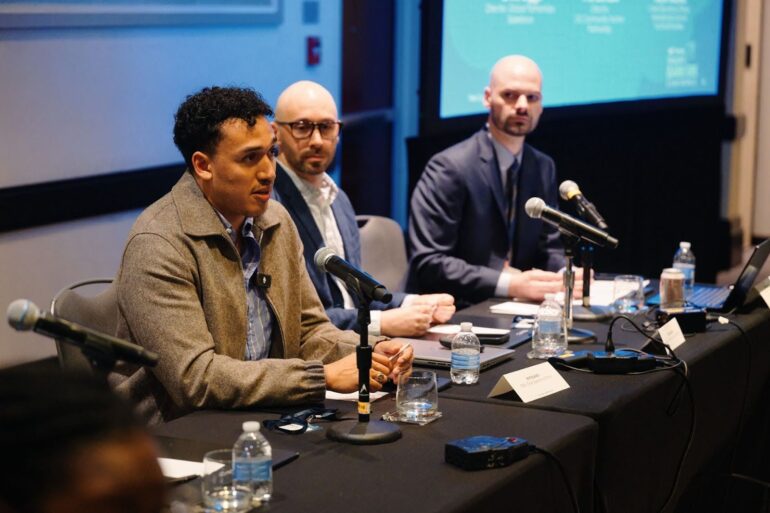
Skye Blanks has watched countless businesses follow a familiar trajectory: early success through founder hustle, rapid growth, then collapse under operational strain. The pattern repeats across industries and markets, from small retailers to tech startups. The problem is not lack of ambition or market opportunity. It is attempting to scale without building systems that can support growth.
This challenge animates both Blanks’ work as Chief Operations Officer at the International Council for Small Business (ICSB) and his consulting practice through Herman Todd Consulting Group (HTCG). Whether working with micro-enterprises in developing markets or established U.S. companies, he sees the same fundamental issue: businesses trying to grow faster than their operational infrastructure can support.
The conventional entrepreneurship narrative celebrates rapid scaling. Founders are encouraged to move fast, disrupt markets, and prioritize growth above all else. This works for venture-backed startups with deep resources to absorb mistakes and iterate quickly. For most small businesses, it is a recipe for disaster.
Growth exposes weaknesses. A business that serves 50 customers monthly can succeed through founder heroics, handling exceptions manually and compensating for system gaps through personal attention. That same business serving 500 customers will collapse if it still relies on founder intervention for routine operations.
The symptoms are familiar to anyone who has experienced rapid growth: customer service quality declines, errors multiply, employees burn out, cash flow becomes unpredictable, and the founder finds themselves working harder while enjoying it less. What once felt like building something meaningful starts feeling like constantly putting out fires.
Blanks argues that these are not growing pains but signals of inadequate systems. The solution is not working harder or hiring more people. It is building operational infrastructure that makes growth sustainable. This means processes that function without founder oversight, tools that automate routine tasks, training that ensures consistent service quality, and metrics that provide visibility into what is actually happening.
This systems-first approach contradicts the “just do it” ethos that dominates entrepreneurship advice. Blanks suggests that businesses are better served by growing more slowly with strong systems than rapidly with weak ones. A company that scales to $2 million in revenue with solid operations is better positioned than one hitting $5 million with chaotic infrastructure.
When Blanks talks about systems, he does not mean complex software or rigid bureaucracy. Systems are simply reliable ways of doing things that do not depend on any single person. They can be as simple as checklists, templates, or documented procedures. The sophistication matters less than the reliability.
Consider customer onboarding. A business without systems relies on whoever happens to handle a new customer explaining things inconsistently. One employee might provide comprehensive information while another forgets critical details. Customers receive different experiences based on random assignment.
A systematic approach documents what every customer should know, when they should learn it, and who is responsible for communication. This might involve welcome emails, scheduled check-in calls, resource libraries, or training sessions. The specific tools matter less than ensuring every customer receives consistent, quality onboarding regardless of which employee manages the relationship.
This consistency has multiple benefits. New employees can deliver quality service faster because they follow proven processes rather than inventing approaches. Customers receive reliable experiences that build trust. Founders can step away from daily operations without quality deteriorating. The business becomes scalable because it does not depend on heroic individual effort.
Through his work with the ICSB’s Knowledge Hubs program, Blanks has observed how businesses in resource-constrained environments often excel at this systematic approach. When you cannot afford to waste time or money, you document what works and replicate it. Entrepreneurs in these markets build systems not because they have time but because they cannot afford not to.
Not all systems are equally important. Blanks recommends focusing first on areas where inconsistency causes the most pain or where founder involvement creates the biggest bottlenecks.
For many businesses, this means starting with customer acquisition and onboarding. How do potential customers find you? What happens when they express interest? How do they become paying customers? Documenting and optimizing this process often reveals significant opportunities.
Next comes service delivery or product fulfillment. How do customers receive what they purchased? What touchpoints exist during delivery? How are problems handled? These operational systems directly impact customer satisfaction and determine whether businesses can grow without quality suffering.
Financial management systems follow close behind. How are expenses tracked? When are invoices sent? How is cash flow monitored? Many small businesses operate with surprisingly limited financial visibility, making decisions based on bank balances rather than actual profitability.
Finally, people systems become critical as teams grow. How are employees hired and trained? How is performance evaluated? How is knowledge shared? Without these systems, businesses struggle to maintain culture and competence as they add team members.
Building systems does not mean eliminating flexibility or creativity. The goal is not to turn businesses into rigid bureaucracies but to create reliable foundations that free people to focus on high-value work.
Blanks uses the metaphor of infrastructure. Good roads do not dictate where people drive, but they make travel easier, safer, and more efficient. Similarly, good business systems do not constrain what people do but make everything easier to do well.
At Herman Todd Consulting Group, Blanks helps clients implement systems incrementally. Rather than attempting comprehensive transformation, he focuses on specific bottlenecks or pain points. Often, addressing just two or three critical systems creates enough stability for businesses to tackle others systematically.
This practical approach recognizes that most small businesses lack resources for lengthy implementation projects. They need improvements that deliver value quickly while building toward longer-term capability. Quick wins fund ongoing change and demonstrate that systematic approaches work better than constant firefighting.
In increasingly competitive markets, operational excellence becomes a key differentiator. Customers have more options than ever. They choose businesses that deliver reliably, respond promptly, and handle problems gracefully. All of this depends on systems.
Businesses with strong systems can also adapt faster to changing conditions. When markets shift or opportunities emerge, they can adjust because their operations do not depend on founder heroics or institutional knowledge locked in individuals’ heads. Documentation, processes, and tools make change manageable rather than catastrophic.
For founders exhausted by the constant demands of running businesses, systems offer a path to sustainability. The goal is not building businesses that can run without them, but creating organizations where their unique talents focus on strategy, innovation, and relationships rather than daily firefighting.
As Blanks demonstrates through his work supporting small businesses globally and consulting with companies domestically, the path to sustainable growth runs through systematic operations. The businesses that thrive do not just work harder; they build smarter. They recognize that scaling without systems is not growth, just chaos at higher volume.